Phase 4 • Autonomous Driving

Tesla vs Chinese Robotaxi Stocks: Exposure, Scale & Risk

Editorial review: August 21, 2026 · Verify volatile market, listing and financial data before acting. · Scope: Tesla vs Chinese Robotaxi Stocks

Tesla and Chinese robotaxi companies represent very different ways to express an autonomous-driving thesis. Tesla combines vehicles, software, energy and autonomy within a massive operating business; Chinese robotaxi names can offer purer thematic exposure but usually carry greater commercialization and financing risk. Comparing them requires normalizing those differences rather than comparing slogans.

Primary query: Tesla vs Chinese robotaxi stocksLast editorial review: 21 Aug 2026
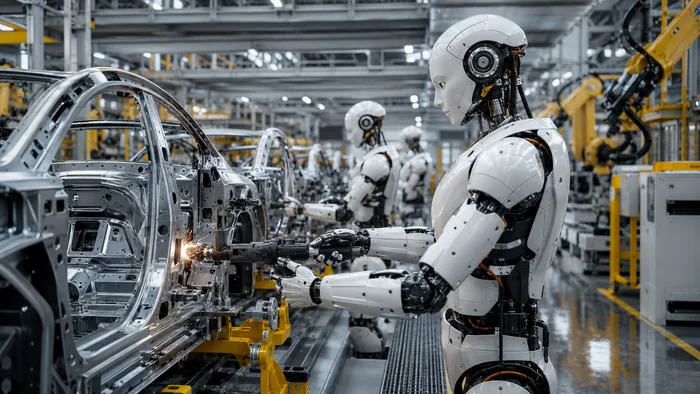
Chinese robotics and automation manufacturing relevant to tesla vs chinese robotaxi stocks

COMPARISON PAGE

Tesla vs Chinese Robotaxi Stocks: side-by-side decision frame

Business modelCompare how each company actually earns money.
Operating proofCompare the metrics that confirm commercialization.
Capital intensityCompare cash needs, capex and dilution risk.
Risk asymmetryIdentify which downside belongs to only one side.
AccessCheck exchange, share class and practical broker availability.
Decision ruleDo not force a winner if the exposures serve different portfolio goals.

Quick answers

Direct answers to high-intent investor questions. Time-sensitive facts are flagged for re-verification rather than presented as permanent.

How should I compare Tesla vs Chinese Robotaxi Stocks?

Compare Tesla vs Chinese Robotaxi Stocks on like-for-like economics rather than labels. Use the same framework for business model, commercial proof, margins, capital intensity, financing needs, investor access and downside risk. A useful comparison should allow different conclusions, including the possibility that neither option is attractive at the current valuation. Editorial review: August 21, 2026 · Verify volatile market, listing and financial data before acting. · Scope: Tesla vs Chinese Robotaxi Stocks

Canonical
/tesla-vs-chinese-robotaxi-stocks/
Intent
COMPARISON
Evidence
PAGE_GROUNDED
Confidence
STRUCTURAL_HIGH
Verified
Grounded in current canonical page architecture

Where is the biggest downside asymmetry in Tesla vs Chinese Robotaxi Stocks?

The main risk question for Tesla vs Chinese Robotaxi Stocks is whether the underlying Humanoid Robotics exposure produces durable economics rather than just thematic attention. Focus on execution, customer concentration, capital needs, competition and valuation. The page should be read as a downside framework: identify the operating evidence that would weaken the thesis before treating upside scenarios as credible.

Canonical
/tesla-vs-chinese-robotaxi-stocks/
Intent
RISK
Evidence
PAGE_GROUNDED
Confidence
STRUCTURAL_HIGH
Verified
Grounded in current canonical page architecture

How should valuation be normalized in Tesla vs Chinese Robotaxi Stocks?

Valuation for Tesla vs Chinese Robotaxi Stocks should be treated as time-sensitive. Compare current market expectations with growth, margins, cash needs, capital intensity and execution risk rather than relying on an evergreen multiple. A strategically important business can still be unattractive if the price already assumes near-perfect execution. Editorial review: August 21, 2026 · Verify volatile market, listing and financial data before acting. · Scope: Tesla vs Chinese Robotaxi Stocks

Canonical
/tesla-vs-chinese-robotaxi-stocks/
Intent
PRICE_OR_VALUATION
Evidence
PAGE_GROUNDED_CURRENT_FACT_NOT_REVERIFIED
Confidence
REVERIFY_CURRENT_FACT
Verified
Phase 2 structural answer; current volatile facts not independently reverified

What is the most practical alternative if Tesla vs Chinese Robotaxi Stocks is hard to access?

An alternative to Tesla vs Chinese Robotaxi Stocks should be chosen by the exposure it provides, not by name similarity. Compare direct peers, adjacent value-chain companies and diversified fund routes. The best alternative is the one that preserves the intended economic exposure while improving access, diversification or risk characteristics. Editorial review: August 21, 2026 · Verify volatile market, listing and financial data before acting. · Scope: Tesla vs Chinese Robotaxi Stocks

Canonical
/tesla-vs-chinese-robotaxi-stocks/
Intent
ALTERNATIVE
Evidence
PAGE_GROUNDED
Confidence
STRUCTURAL_HIGH
Verified
Grounded in current canonical page architecture

Targeted verification and decision notes

These answers were reviewed in Phase 16 to separate current verified facts from broker-specific access, valuation methodology, and pre-listing assumptions.

How should valuation be normalized in Tesla vs Chinese Robotaxi Stocks?

Normalize valuation only after making the companies comparable. Use the same measurement date and currency, match enterprise-value metrics to operating measures such as revenue or EBITDA where appropriate, and compare earnings multiples only when accounting treatment and profitability are reasonably comparable. Separate growth, margin, capital intensity, dilution and net-cash/debt differences. This is a framework answer, not a live valuation call.

Confidence: FRAMEWORK_NO_LIVE_MARKET_DATA_REQUIRED · Reviewed: 2026-09-11

Investment / investability facts

Structured facts for this page. Volatile security, listing and access details are marked for current verification rather than presented as permanently current.

Page role
COMPARISON
Exposure type
COMPARATIVE_EXPOSURE
Investability class
MULTI_SECURITY_COMPARISON
Listing status
UNKNOWN_FROM_EXISTING_CONTENT
Ticker signal
AND
Exchange signal
NOT_EXTRACTED
Access
VARIES_BY_UNDERLYING_SECURITY
Key risks
adoption timing; hardware commoditization; cash burn; customer concentration; valuation
Evidence state
STRUCTURAL_CLASSIFICATION_FROM_CANONICAL_PAGE
Confidence
STRUCTURAL_HIGH
Current-fact verification
NOT_REVERIFIED_IN_PHASE3

No live price, market cap or valuation multiple is stored in this Phase 3 object. Verify volatile market data separately before acting.

Verification rule: Confirm current listing status, ticker and exchange from official company or exchange sources before acting.

Investor decision snapshot

  • Exposure type: verify the current evidence and source date before using it in a decision.
  • Listing & access: verify the current evidence and source date before using it in a decision.
  • Business model: verify the current evidence and source date before using it in a decision.
  • Commercial scale: verify the current evidence and source date before using it in a decision.
  • Financial resilience: verify the current evidence and source date before using it in a decision.
  • Valuation & risk: verify the current evidence and source date before using it in a decision.

Commercialization is the only scoreboard that matters

Autonomous-driving research pages should move quickly past the technology demo. Investors need to know whether a company is converting permits, pilots and partnerships into paid miles, recurring software revenue, vehicle deployments or licensing. Fleet size is useful only when paired with utilization and economics. A company can operate many vehicles while still generating unattractive unit economics, so the research framework must connect operational scale to revenue quality and cash requirements.

For Tesla vs Chinese robotaxi stocks, recheck this evidence after earnings, listing changes, major contracts or regulation materially alter the thesis.

Regulation creates both moat and friction

Autonomous driving is unusually dependent on permits, local rules, safety cases and government cooperation. A company with approvals across several cities can possess a genuine advantage because regulatory learning compounds. Yet the same dependence creates risk: deployment can be delayed or geographically fragmented. Investors should track where paid operations are actually permitted and distinguish commercial service from testing authorization.

For Tesla vs Chinese robotaxi stocks, recheck this evidence after earnings, listing changes, major contracts or regulation materially alter the thesis.

Hardware architecture changes the economics

Robotaxi stacks combine compute, cameras, lidar, radar, mapping, software and vehicle integration. Falling sensor costs can improve deployment economics, while rising compute requirements can offset some savings. Investors comparing operators and suppliers should ask who captures value when hardware becomes cheaper: the platform, the chip supplier, the sensor maker or the vehicle OEM.

For Tesla vs Chinese robotaxi stocks, recheck this evidence after earnings, listing changes, major contracts or regulation materially alter the thesis.

International expansion needs proof, not flags on a map

Global expansion is strategically attractive because it diversifies regulatory and customer risk, but opening an office or announcing a memorandum is not the same as meaningful overseas revenue. The stronger evidence is contracted fleet deployment, recurring customer payments, local regulatory permits and a business model that can scale without rebuilding the entire operating stack in every country.

For Tesla vs Chinese robotaxi stocks, recheck this evidence after earnings, listing changes, major contracts or regulation materially alter the thesis.

How to research this opportunity without buying the story

Begin with the exposure map. Identify exactly what part of the value chain the company or basket represents and what percentage of revenue depends on the theme today. Then verify listing status and investor access. Next test the financial engine: revenue growth, gross margin, operating cash needs, balance-sheet resilience and valuation. Finally list the catalysts that would make the thesis stronger and the evidence that would invalidate it. This process is less exciting than a viral technology clip, which is precisely why it is more useful.

For Tesla vs Chinese robotaxi stocks, recheck this evidence after earnings, listing changes, major contracts or regulation materially alter the thesis.

Valuation belongs inside every technology thesis

The more exciting a technology narrative becomes, the easier it is to forget that expected return depends on the price paid. Growth can coexist with disappointing shareholder outcomes when the starting valuation assumes perfection. Use verified valuation measures that fit the business model, and compare them with profitability, growth quality and capital intensity. If reliable data is not available, say so. A missing number is preferable to a fabricated one.

For Tesla vs Chinese robotaxi stocks, recheck this evidence after earnings, listing changes, major contracts or regulation materially alter the thesis.

Questions to verify before making a decision

For this query, the most useful research questions are practical: Is the exposure direct or indirect? Is the company actually listed? Can your account access the security? How much current revenue comes from the theme? What financial evidence supports the growth narrative? How capital intensive is scaling? Which competitor or substitute could damage pricing? What valuation assumptions are already embedded in the share price?

Because these industries evolve quickly, treat all volatile figures as dated observations rather than permanent facts. Use company filings and exchange notices as the primary source for listing status and reported financials. Media reports can help explain context but should not override formal disclosures. RICH does not fill missing data with invented estimates.

Related research

>Related autonomous driving researchPony AI vs WeRide stockRelated autonomous driving researchBaidu Apollo stockRelated autonomous driving researchHorizon Robotics stockRelated autonomous driving research

Frequently asked questions

Is this a recommendation to buy?

No. This page is research and educational material, not individualized investment advice. Use it to identify what to verify before making your own decision.

How do I know whether a company is actually public?

Check the company investor-relations site and the relevant exchange or regulator. Listing status can change, especially around IPOs and dual listings.

Can US investors buy these shares?

Sometimes, but access depends on the exchange, share class, broker, jurisdiction and account permissions. Verify availability directly with your broker.

Why focus on bottom-of-funnel investment searches?

These queries come from investors who already understand the theme and are deciding between companies, access routes or alternatives. That makes precise comparison and transaction information more useful than generic sector education.

What financial metrics matter most?

It depends on the business, but revenue growth, gross margin, operating losses or profits, cash flow, balance-sheet strength, valuation and capital intensity are usually central.

How often should listing and financial data be updated?

Listing status should be checked whenever a material event occurs. Financial data should be updated after new results and clearly date-stamped so readers know the information period.

What is the biggest mistake with theme investing?

Treating a strong technology trend as proof that every related stock will perform well. Exposure, economics, competition and valuation still determine shareholder outcomes.

Should I prefer a pure-play company or a diversified supplier?

Pure plays can offer stronger thematic sensitivity but often higher risk. Diversified suppliers may have more resilient revenue but less upside if the theme explodes. The choice depends on the investor objective.

Why are comparison pages useful?

They force the analysis to normalize two companies across exposure, growth, profitability, market access, catalysts and risks instead of evaluating each in isolation.

How should I treat IPO rumors?

As unverified until formal exchange or company filings support them. A planned or rumored IPO is not a tradable security and should never be presented as one.

What does a high-risk label mean here?

It means the investment case may depend heavily on emerging technology, aggressive expectations, policy, financing or volatile valuation. It is not a forecast of short-term price movement.

Where should I continue my research?

Use the related sector hub, comparison pages and how-to-invest guides on RICH, then verify facts against company filings and exchange sources before acting.

Take the comparison one level wider

Use the main site to place Tesla vs Chinese Robotaxi Stocks beside additional peers and adjacent economic layers.

Compare More China Tech Opportunities →

Risk disclosure: This material is for research and education only. It is not individualized investment advice, a solicitation or a guarantee of returns. Securities, listings, regulations and market access can change. Verify current information independently before making financial decisions.

Avoid a forced two-stock decision

Expand Tesla vs Chinese Robotaxi Stocks into a broader peer set before treating the choice as binary.

Broaden the Comparison →

Independent research pack: Tesla vs Chinese Robotaxi Stocks: Exposure, Scale & Risk

Within the Tesla vs Chinese Robotaxi Stocks thesis, use this page as a standalone decision worksheet. It should make the trade-offs visible even if the reader never leaves this URL. That distinction is specific to the decision this page is designed to support.

What this page should help you answer

Minimum evidence checklist

  1. Listing venue and investor-access differences
  2. Current valuation framework using like-for-like metrics
  3. The operating metric each company must improve
  4. A downside scenario for each side
  5. Revenue composition for both companies
  6. Gross-margin and cash-flow differences

Source hierarchy

For Tesla vs Chinese Robotaxi Stocks, start with exchange records, company filings and official investor-relations material. Use dated financial reporting for context, then independently recheck any fast-moving price, listing or valuation claim.

Red flags that should stop the research

Standalone decision rule

For Tesla vs Chinese Robotaxi Stocks, do not choose a winner until both companies have been compared on the same economic, access and risk framework. That page-level context matters more than repeating a generic sector checklist.
Frequently asked questions

What is the difference between a robotaxi stock and an autonomous-driving supplier?

A robotaxi company operates or develops autonomous mobility services, while suppliers may sell chips, lidar, software, sensors or vehicle systems into the broader ecosystem.

Are Pony AI and WeRide directly comparable?

They overlap in autonomous-driving exposure, but investors should still compare business mix, deployment strategy, revenue sources, capital needs and market access.

Why do lidar stocks matter to autonomous-driving investors?

Lidar can be an enabling sensing technology for advanced driver-assistance and autonomous systems, giving investors a picks-and-shovels route into the theme.

Can foreign investors buy every Chinese autonomous-driving stock?

No. Access varies by exchange, listing venue, share class, broker support and jurisdiction.

What should I verify before buying a robotaxi-related stock?

Verify the ticker, exchange, listing status, business exposure, latest financials, deployment scale, financing needs and major regulatory constraints.

What are the main risks in robotaxi stocks?

Key risks include regulation, safety incidents, slow commercialization, expensive fleets, intense competition, dilution and uncertain unit economics.

Is autonomous-driving revenue always material to the listed company?

No. Some diversified companies have only partial exposure, so investors should distinguish core revenue from thematic association.

How should I compare Hesai and RoboSense?

Compare product mix, customer concentration, shipment growth, margins, profitability, technology positioning, valuation and listing accessibility.

Does more vehicle deployment automatically mean better economics?

No. Deployment can grow while losses remain high. Unit economics, fleet utilization, pricing and capital efficiency matter.

What is indirect exposure to autonomous driving?

Indirect exposure includes component makers, semiconductor companies, lidar suppliers and vehicle manufacturers that benefit from broader adoption.

How current should operating data be?

Very current. Fleet size, deployment approvals, revenue growth and partnership announcements can change quickly and should be date-stamped.

Is this personalized investment advice?

No. The material is for research and comparison only and does not recommend a security for any specific investor.

Continue the side-by-side research

Use the main research site for additional company, sector and access comparisons related to Tesla vs Chinese Robotaxi Stocks.

Continue Comparative Research →